Welcome to Marriage: Unique for a Reason!

Catholic Churches Teachings on Marriage: U.S. Bishops on Marriage

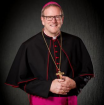
Read a welcome message from Bishop Salvatore J. Cordileone, Bishop of Oakland and chairman of the USCCB Subcommittee for the Promotion and Defense of Marriage.

——————————————————————————————-

What is marriage? Are a man and a woman really essential to marriage? What about the child … and the role of mothers and fathers? Is it discriminatory to defend marriage as the union of one man and one woman? What impact does the redefinition of marriage have on religious liberty?

These are just a few of the many questions about marriage today. They all hinge upon the first question: What is marriage? When the answer to this question is understood, everything else falls into its proper place.

Marriage is unique for a reason. We invite you now to find out why:

——————————————————————————————————————————-

What does the Catholic Church teach about marriage?

Basing her teaching on God’s revelation in Scripture and the meaning of the human person, created male and female in the image of God, the Catholic Church teaches that marriage is the lifelong partnership of mutual and exclusive fidelity between a man and a woman ordered by its very nature to the good of the spouses and the procreation and education of children (see CCC, no. 1601; CIC, can. 1055.1; GS, no. 48). The bond of marriage is indissoluble – that is, it lasts “until death do us part.” At the heart of married love is the total gift of self that husband and wife freely offer to each other. Because of their sexual difference, husband and wife can truly become “one flesh” and can give to each other “the reality of children, who are a living reflection of their love” (FC, no. 14).

Marriage between a baptized man and a baptized woman is a sacrament. This means that the bond between husband and wife is a visible sign of the sacrificial love of Christ for his Church. As a sacrament, marriage gives spouses the grace they need to love each other generously, in imitation of Christ.

(From FAQ #3 in The Meaning of Marriage and Sexual Difference FAQs; see all FAQs)

Church Teaching About Marriage

United States Conference of Catholic Bishops

Español:

Catechism of the Catholic Church

Second Vatican Council

Pope Benedict XVI

  • For a compilation of selections form Pope Benedict’s teachings on marriage and family, see Family (USCCB, 2009)

Major documents:

  • Encyclical Caritas in veritate (2009): see nos. 15, 44, and 51 (on the need for a “human ecology”)
  • Apostolic Exhortation Sacramentum Caritatis (2007) : see nos. 27-29, “The Eucharist and Matrimony.”

Various addresses and homilies about marriage:

Pope John Paul II

Major documents:

Various addresses and homilies about marriage:

  • Homily during the Jubilee of Families (October 15, 2000) : see nos. 2, 3
    • Topics: persons as relational, marital communion requires body and soul
  • See also John Paul II’s Wednesday audiences (Sept. 5, 1979 – Nov. 28, 1984) collectively known as “the theology of the body.” Available online at EWTN’s website and at the Vatican website (includes all of John Paul II’s audiences).
    • The most recent critical English translation is Man and Woman He Created Them: A Theology of the Body, trans. Michael Waldstein (Boston: Pauline Books & Media), 2006.

Congregation for the Doctrine of the Faith

Español:

Pontifical Council for the Family

Pontifical Council for Justice and Peace

Compendium of the Social Doctrine of the Church (2004)

  • See nos. 144-148, The Equal Dignity of All People and the “Equality in Difference” between Man and Woman
  • See nos. 209-254, Marriage and Family
  • Importance of the family for the person (no. 212)
  • Importance of the family for society (nos. 213-214)
  • Marriage as the foundation of the family (nos. 215-218)
  • Sexual identity, difference, and complementarity (no. 224)
  • Homosexual unions (nos. 228-229)


Español: Compendio de la Doctrina Social de la Iglesia (2005)

  • Ve nos. 144-148, La igual dignidad de todas las personas
  • Ve nos. 209-254, La familia, Célula vital de la sociedad
  • La importancia de la familia para la persona (no. 212)
  • La importancia de la familia para la sociedad (nos. 213-214)
  • El matrimonio, fundamento de la familia (nos. 215-218)
  • La identidad sexual, la diferencia, y la complementariedad (no. 224)
  • Las uniones homosexuales (nos. 228-229


—————————————————————————————————————-

A note on language: Why doesn’t this website use the terms “same-sex marriage” or “gay marriage”?

The terms “same-sex marriage” and “gay marriage” beg the question: What is marriage? Is it even possible for two persons of the same sex to be married? Using the terms “same-sex marriage” and “gay marriage” already presupposes (wrongly) that marriage comes in a variety of forms: “same-sex,” “opposite-sex,” “homosexual,” “heterosexual,” and so forth.

Put another way, the sexual difference and complementarity of husband and wife is not something that is added to a pre-existing thing called “marriage,” like you might add sprinkles to a sundae. Instead, male-female complementarity is at the very heart of marriage and part of its authentic definition. Marriage wouldn’t be marriage without a man and a woman, a husband and a wife. This is why adding alternative adjectives to the word “marriage” (“same-sex,” “gay,” and so on) produces not another “variety” of marriage, but a different thing entirely. It radically alters what marriage is in its very essence.

In contrast, the goal of the Marriage: Unique for a Reason website is to explain and illuminate the singular reality that the word “marriage” refers to: the faithful, fruitful, lifelong union of one man and one woman. A reality, you might say, without any adjectives. In the end, what’s at stake is precisely the authentic meaning of marriage. We invite you to explore the resources available on this website to understand why marriage is and can only be the union of one man and one woman.

—————————————————————————————————————-

Made for Each Other: Sexual difference is essential to marriage

“Love is Love,” declares a popular slogan in support of redefining marriage to include persons of the same sex. Its implication is clear: if marriage is about love, then any two adults who love each other should be free to marry … so the claim goes. Such an idea seems to have a certain appeal today, since it attempts to hold up the most universal of human ideals: love and freedom. But love and freedom don’t operate in a vacuum. Like breathing depends upon oxygen, love and freedom … and marriage … depend upon truth. Crucial questions cry out to be answered: Does love have anything to do with the human body, with being a man or a woman? Is there anything unique about married love? What is marriage? Keep reading…

Sexual Difference: Frequently Asked Questions

1.   Marriage: What’s a good starting point?
2.   Where does marriage come from?
3.   What is marriage?
4.   Why can’t marriage be “redefined” to include two men or two women?
5.   What is sexual difference?
6.   Isn’t marriage just about love and commitment between two people?
7.   Why does a person’s gender matter for marriage?
8.   How is the love between a husband and a wife irreducibly unique?
9.   What is complementarity?
10. Why does the Catholic Church care so much about marriage?
11. Where can I learn more about marriage?

What about same-sex attraction?

The Church’s teaching on marriage recognizes that every human person is made in the image of God and has inviolable dignity. Every human person is a gift, deserving respect and love. It is important to acknowledge that persons with homosexual inclinations have suffered and can suffer a great deal…. The Church cares for and accepts persons who experience homosexual inclinations. She refuses to label anyone. Many with a homosexual inclination attend Mass regularly, are active in parish life, and seek to receive the sacraments. Keep reading…

—————————————————————————————————————-

Made for Life: Marriage welcomes the “supreme gift” of the child

Any honest consideration of marriage must think about children, the hope of our future. For millennia, people of every generation and of every culture have understood that the marriage of a man and a woman is the central pro-child social institution and the rock of the natural family. Marriage has never been about the relationship of just any two adults. Marriage brings together a man and a woman who unite as husband and wife to form a unique relationship open to welcoming and caring for new life. As the union of husband and wife, marriage is a union open from within to the blessing of fruitfulness. Children are born “from the very heart” of marriage, from the mutual self-giving between husband and wife (CCC, no. 2366). They are the “supreme gift” of marriage and its “ultimate crown” (GS, nos. 50, 48). Keep reading…

The Gift of Children: Frequently Asked Questions

1. What does marriage have to do with children?
2. Does the Church think that marriage is a mere “instrument” for having children?
3. What’s the difference between a husband and wife who can’t have children, and two persons of the same sex, who also can’t have children?
4. Why is a child meant to have both a father and a mother?
5. What about single paren
ts? These families lack a father or a mother, just like households headed by two men or two women.
6. Aren’t children adaptable to many different family forms?
7. Don’t studies show that children do fine with two “moms” or two “dads”?
8. What about adoption?
9. New technology like “in vitro fertilization” (IVF) can enable two men or two women to have a child. Why does the Church teach that this is unacceptable? 

—————————————————————————————————————-

Made for the Common Good: Marriage safeguards justice

Are you a bigot if you support preserving the definition of marriage as between one man and one woman in the law? It is no exaggeration to say that the most common criticism leveled against those who hold to the classic and time-honored definition of marriage is that they are being “discriminatory.” “Marriage,” goes the argument, “is a human right. It’s unfair to exclude people from marriage simply because they want to marry someone of the same sex.” However, this begs the prior question of marriage. Rights, equality, fairness, and non-discrimination are all important principles and values for the good of society. But an honest consideration of these principles requires an honest consideration of the natural facts of marriage. Keep reading…

The Common Good & Human Dignity: Frequently Asked Questions

1. What does “intrinsic dignity of the human person” mean?
2. What does marriage have to do with human dignity?
3. Does the Church believe that people who experience same-sex attraction have equal dignity?
4. What does “the common good” mean?
5. Isn’t marriage a private relationship? What does it have to do with the common good?
6. Isn’t marriage just a religious issue that the government should stay out of?
7. What are basic human rights?
8. Is marriage a basic human right?
9. What’s the harm of same-sex “marriage”?
10. But isn’t it unjust discrimination to not allow two men (or two women) to marry?
11. What about civil rights?
12. Isn’t allowing two men or two women to marry just an extension of allowing interracial couples to marry?
13. What about equality and fairness?
14. What about “civil unions” or “domestic partnerships” between two persons of the same sex?

—————————————————————————————————————-

Made for Freedom: Marriage and religious liberty stand – or fall – together

Marriage, the lifelong and exclusive union of one man and one woman, is a distinct good in itself, and deserves to be protected. At the same time, because marriage and the family are the foundation of society, proposals to “extend” and ultimately “redefine” marriage to include two persons of the same sex threaten not only to empty marriage of its meaning, but also to collapse other fundamental pillars of society. One of those pillars is religious liberty. Keep reading…

Marriage and Religious Liberty: Frequently Asked Questions

1. What is religious liberty?
2. How are marriage and religious liberty connected?
3. How could changing the legal definition of marriage have any effect on religious liberty?
4. But would ministers really be forced to officiate at the “wedding” of two persons of the same-sex?
5. What’s the real threat to religious liberty posed by same-sex “marriage”?
6. Have any of these threats come to pass?
7. Doesn’t a religious exemption protect institutions and individuals if they believe that marriage can only be between a man and a woman?

ABOUT THE ART

Saints Joachim and Anne are the father and mother of the Blessed Virgin Mary. Mary is the fruit of their marriage. By a singular grace of God in view of the merits of Jesus, she was preserved from all stain of Original Sin from the moment of her conception. Thus it is in the context of married life and conjugal love that Mary is prepared to receive the Divine Logos, the Word made flesh, Jesus Christ our Lord. Jesus is the Logos, the “Reason” at the heart of all reason and truth, including the truth of marriage. The marriage between Joachim and Anne is a significant witness to why marriage is “unique for a reason.”