Posts Tagged ‘public policy’

Archbishop Aquila of Denver Denounces Colorado Civil Unions Bill

Mar. 13, 2013

Yesterday March 12, the Colorado legislature approved a bill that establishes civil unions for two persons of the same sex, a situation we covered earlier here. The bill awaits the signature of Governor John Hickenlooper, who has said that he plans to sign the bill into law.  The Archbishop of Denver, Samuel J. Aquila, released a strong statement about the passage of the civil unions bill.

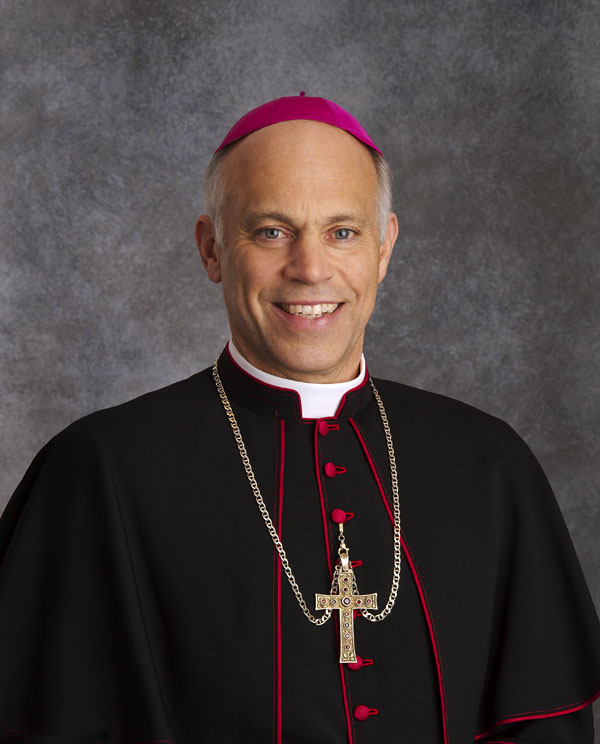
Denver Archbishop Samuel J. Aquila

The Archbishop writes, “Regrettably, the Colorado Legislature has approved a civil unions bill today which harms families, civil liberties, and the natural rights of all Colorado’s children.”

He makes clear that, as he has said before, the civil unions bill is about redefining marriage and the family:

Senate Bill 11 is the beginning of an effort to redefine the family in Colorado and to undermine the right of all children to have a mother and a father. Civil unions are not about equality, tolerance or fairness. They create an alternate reality in which all institutions can be self-defined. Make no mistake: Civil unions are the first step to redefining marriage and to radically redefining the concept of civil rights.

Indeed, Colorado Senator Pat Steadman, a supporter of the bill, has expressed dissatisfaction with civil unions, calling them “separate, and distinct, and lesser, and unequal.” Implying that civil unions are but a temporary settlement, Steadman said, “We passed this bill because this is the best we can do.” As the Illinois Catholic Conference argued in a 2009 statement, civil union laws are consistently used as a stepping stone to advance full marriage redefinition legislation.

Regarding the argument that civil rights demand civil unions, Archbishop Aquila writes,

Civil rights are about protecting individuals and institutions from tyranny or oppression, not providing legal endorsement to all conceivable social arrangements and constructs. The Church recognizes and affirms the dignity of every human person—but she does not see all relationships as equal. Marriage is a unique social relationship between a man and a woman which exists for the good of children and as the foundation of all human communities. Marriage has been uniquely protected in law for millennia in order to preserve and promote the foundations of all social stability.

The Archbishop also draws attention to the lack of reasonable conscience protections in the new law, particularly for adoption and foster care agencies.

Senate Bill 11 is particularly troubling because the religious liberty of all Coloradans has been discarded under the guise of equality. The ability for religious-based institutions to provide foster care and adoption services for Colorado’s children is now dangerously imperiled.

Indeed, adoption and foster care agencies in several states have shut down because of civil unions or marriage redefinition laws that would force them to place children with two persons of the same sex, a scenario of which Colorado providers of foster care and adoption services were very much aware.

Not only does the approved bill lack conscience protection, but proponents of the bill publicly expressed their disregard for religious persons and institutions, writes Archbishop Aquila.

Faced with the reasonable request for religious liberty and conscience accommodations, state Sen. Pat Steadman offered the following: “So, what to say to those who claim that religion requires them to discriminate? I’ll tell you what I’d say. Get thee to a nunnery and live there then. Go live a monastic life away from modern society, away from the people you can’t see as equal to yourself.” These comments are woefully antagonistic to Catholics, to Christians and to all people of faith and good will.

In the same vein, bill supporter Sen. Jessie Ulibarri, in response to testimony about a Colorado baker who declined to make a cake for two women’s “wedding” ceremony and now faces fine and possible jail time, said, Let them eat cake.”

Archbishop Aquila concludes his statement by saying, “Marriage is a stabilizing institution at the foundation of civil society. Religious liberty is a civil rights issue. Today both have been grievously harmed. Today our state and federal Constitutions have been dealt a troubling blow.”

Read Archbishop Aquila’s entire statement on the Colorado civil unions bill.

State Update: Colorado (Civil Unions Bill)

Mar. 9, 2013

Colorado is one of a number of states that are currently facing marriage redefinition challenges. More specifically, a bill has been proposed in Colorado (or rather, re-proposed; it failed last year) that would establish civil unions for two persons of the same sex. As of March 6, the bill has been approved by the Senate Judiciary Committee and the House Finance Committee. According to CBS Denver, the bill could be voted on by the full House as early as next week, the last stop before the governor’s desk.

Two key things to know about the Colorado civil unions bill:

1. This bill IS about redefining marriage.

Don’t let the bill’s name fool you, said Denver Archbishop Samuel Aquila. In a January 23 column for the Denver Catholic Register, Archbishop Aquila wrote, “Make no mistake, the Colorado Civil Unions Act, and all civil union legislation, is an attempt to redefine marriage – to undercut the long-standing human understanding that the stable, fruitful partnerships between men and women should be promoted and protected.”

The Archbishop points out that “in every state where civil union legislation has passed, its proponents have pushed to redefine marriage itself.” One example is Illinois, which approved civil unions in 2011 and is now debating full marriage redefinition.

Archbishop Aquila also pointed out that “in Colorado, same-sex couples can already attain the legal benefits civil unions would bring. The real goal of civil union legislation is social endorsement of same-sex unions, and, soon enough, the redefinition of marriage.” An example of this is Rhode Island, where civil unions were approved in 2011 but met with little enthusiasm, even though the bill granted the same benefits to those who entered civil unions as to married couples. The Rhode Island legislature subsequently proposed full marriage redefinition, which was passed by the House in January 2013 and has yet to be voted on by the Senate.

2. The bill lacks conscience protections

Unlike the civil unions bill proposed – and defeated by one vote – in 2012, the current bill does not include any protections for one group poised to incur serious consequences from its passage: adoption agencies. Language included in the 2012 bill – that the bill “shall not be interpreted to require a child-placement agency to place a child for adoption” with a couple in a civil union – is entirely absent from the 2013 version. Mark Rohlena, president and CEO of Catholic Charities of Central Colorado, said that the bill’s passage could threaten the religious liberty of agencies like his that decline to place children with two persons of the same sex.

Indeed, that prediction is far from unfounded. In several states where civil union or marriage redefinition legislation has been passed – DC, Massachusetts, Illinois – religious adoption agencies that wouldn’t place children with two persons of the same sex have closed down. (See this video for an up-close look at the impact on families and children of foster and adoption agencies’ closing in Illinois.)

The Colorado Catholic Conference opposes the civil unions bill and asks all Colorado citizens to make their opposition known.

Learn more:

USCCB News Release: Heads of Military Archdiocese, Subcommittee for the Promotion, Defense of Marriage Object to Defense Department Same-Sex Domestic Partners Policy

Feb. 19, 2013

From the USCCB (Feb. 15, 2013):

  • Policy undermines marriage between one man, one woman
  • Violates Defense of Marriage Act (DOMA)
  • Threatens conscience rights of military personnel

WASHINGTON— Archbishop Timothy P. Broglio of the Archdiocese for the Military Services USA, and Archbishop Salvatore Cordileone of San Francisco, chairman of the bishops’ Subcommittee for the Promotion and Defense of Marriage, voiced concern February 15 about a new Department of Defense (DOD) policy on “same-sex domestic partners” and about related comments made by President Obama in his State of the Union address.

Archbishop Broglio questioned how the department could set a policy that undermines the federal Defense of Marriage Act (DOMA) and said the new policy could threaten conscience rights of members of the military. Forcing an officer “to violate his conscience would not be fair,” he said.

Archbishop Cordileone highlighted the policy’s potential effect on children.

“Children, who are our future, have a right to be raised by their mother and father together,” he said. “For the sake of our nation, and especially for the sake of our children, marriage should be promoted and protected at every opportunity, never undermined.”

The full response follows.

Today, Archbishop Timothy P. Broglio, Archbishop for the Military Services USA, and Archbishop Salvatore Cordileone of San Francisco, chairman of the bishops’ Subcommittee for The Promotion and Defense of marriage, responded with concern to a new Department of Defense Policy issued this week regarding “same-sex domestic partners” and to related comments made by President Obama in his State of the Union address.

The DOD policy allocates marriage-like benefits to persons in same-sex relationships. In an apparent reference to the new policy, President Obama said, “We will ensure equal treatment for all service members, and equal benefits for their families – gay and straight.”

In response to the President’s remarks and the new policy, Archbishop Broglio said, “This new policy under the guise of ‘equal benefits’ undermines marriage as the union of one man and one woman because it treats two persons of the same sex as spouses. Can the Secretary of Defense establish a policy that undermines federal law as established by DOMA?” Noting the possible negative effects on religious liberty, Archbishop Broglio asked, “Could a JAG officer choose, out of religious or moral convictions, not to give legal advice on marital and family issues to same-sex ‘partners’ without being subject to discipline? Forcing the officer to violate his conscience would not be fair.”

Archbishop Cordileone also expressed concern over the new policy. “For one thing, it undermines the Defense of Marriage Act, which is the law of the land,” he said. He added: “There is no question that all service members should be treated equally, but it is not discrimination to treat different things differently. Only a man and a woman can bring children into the world, and so marriage, as the foundation of the family, by its very nature can only be between a man and a woman. In fact, by singling out two people of the same sex in a sexual relationship for special consideration, the policy excludes other possible types of relationships between two adults, thus treating the same thing differently. Actually, then, it is rather this policy that discriminates. More importantly, children, who are our future, have a right to be raised by their mother and father together. For the sake of our nation, and especially for the sake of our children, marriage should be promoted and protected at every opportunity, never undermined.”

The new Department of Defense policy memorandum was issued by Secretary of Defense Leon Panetta earlier this week. The policy entitled “Extending Benefits to Same-Sex Domestic Partners of Military Members” must be implemented by the military services no later than October 1, 2013. Under the new policy, all that is required for a “domestic partnership” is a committed relationship between two adults of the same sex who are not in a marriage, civil union, or domestic partnership with anyone else. In many respects, “same-sex domestic partners” of military members will be treated like spouses. For instance, the “partner” of the military member will be entitled to a dependent military ID card, legal assistance from the military, and base exchange and commissary privileges. If both “partners” are in the military, they would be eligible for a joint duty assignment – what was customarily referred to as a joint spouse assignment. President Obama made his remarks on Tuesday in his State of the Union address before a joint session of the United States Congress.

USCCB News Release: USCCB Files Supreme Court Briefs Supporting DOMA, Proposition 8

Jan. 29, 2013

USCCB News Release (Jan. 29, 2013)

  • Marriage is the union of one man and one woman
  • Unique value in children raised by mother and father together
  • Redefining marriage would impose burdens on religious liberty and other rights

WASHINGTON—The U.S. Conference of Catholic Bishops on January 29 filed amicus briefs in the United States Supreme Court in support of the federal Defense of Marriage Act (DOMA) and California’s Proposition 8, both of which  confirm the definition of marriage as the union of one man and one woman.

DOMA was passed by Congress and signed by President Clinton in 1996 and defines marriage for federal and inter-state recognition purposes. Proposition 8 is a state constitutional amendment approved by the citizens of California in 2008. Both laws are challenged because they define marriage exclusively as the union of one man and one woman.

Urging the Court to uphold DOMA http://www.usccb.org/about/general-counsel/amicus-briefs/upload/united-states-v-windsor.pdf  the USCCB brief in United States v. Windsor says that “there is no fundamental right to marry a person of the same sex.” The brief also states that “as defined by courts ‘sexual orientation’ is not a classification that should trigger heightened scrutiny,” such as race or ethnicity would.

It added that “civil recognition of same-sex relationships is not deeply rooted in the Nation’s history and tradition—quite the opposite is true. Nor can the treatment of such relationships as marriages be said to be implicit in the concept of ordered liberty, such that neither liberty nor justice would exist if they were sacrificed.”

USCCB argued that previous Supreme Court decisions “describing marriage as a fundamental right plainly contemplate the union of one man and one woman.”

The USCCB also cautioned that a decision invalidating DOMA “would have adverse consequences in other areas of law.”

In a separate brief filed in Hollingsworth v Perry urging the Court to uphold Proposition 8 http://www.usccb.org/about/general-counsel/amicus-briefs/upload/hollingsworth-v-perry.pdf, the USCCB states that there are many reasons why the state may reasonably support and encourage marriage, understood as the union of one man and one woman, as distinguished from other relationships. Government support for marriage, so understood, is “recognizing the unique capacity of opposite-sex couples to procreate” and “the unique value to children of being raised by their mother and father together.”

The USCCB brief states that “[T]he People of California could reasonably conclude that a home with a mother and a father is the optimal environment for raising children, an ideal that Proposition 8 encourages and promotes. Given both the unique capacity for reproduction and unique value of homes with a mother and father, it is reasonable for a State to treat the union of one man and one woman as having a public value that is absent from other intimate interpersonal relationships.”

The USCCB brief adds that “While this Court has held that laws forbidding private, consensual, homosexual conduct between adults lack a rational basis, it does not follow that the government has a constitutional duty to encourage or endorse such conduct. Thus, governments may legitimately decide to further the interests of opposite-sex unions only. Similarly, minimum standards of rationality under the Constitution do not require adopting the lower court’s incoherent definition of ‘marriage’ as merely a ‘committed lifelong relationship,’ which is wildly over-inclusive, empties the term of its meaning, and leads to absurd results.”

“Marriage, understood as the union of one man and one woman, is not an historical relic, but a vital and foundational institution of civil society today,” the USCCB brief states. “The government interests in continuing to encourage and support it are not merely legitimate, but compelling. No other institution joins together persons with the natural ability to have children, to assure that those children are properly cared for. No other institution ensures that children will at least have the opportunity of being raised by their mother and father together. Societal ills that flow from the dissolution of marriage and family would not be addressed—indeed, they would only be aggravated—were the government to fail to reinforce the union of one man and one woman with the unique encouragement and support it deserves.”

The USCCB brief also notes that “Proposition 8 is not rendered invalid because some of its supporters were informed by religious or moral considerations. Many, if not most, of the significant social and political movements in our Nation’s history were based on precisely such considerations.  Moreover, the argument to redefine marriage to include the union of persons of the same sex is similarly based on a combination of religious and moral considerations (albeit ones that are, in our view, flawed).  As is well established in this Court’s precedent, the coincidence of law and morality, or law and religious teaching, does not detract from the rationality of a law.”

USCCB notes that a judicial decision invalidating Proposition 8’s definition of marriage would have adverse consequences in other areas of law.

“[R]edefining marriage—particularly as a matter of constitutional law, rather than legislative process—not only threatens principles of federalism and separation of powers, but would have a widespread adverse impact on other constitutional rights, such as the freedoms of religion, conscience, speech, and association.  Affirmance of the judgment below would create an engine of conflict in this area, embroiling this Court and lower courts in a series of otherwise avoidable disputes—pitting constitutional right squarely against constitutional right—for years to come.”


Dr. Jennifer Roback Morse to Rhode Island Legislature: Remarks on redefining marriage and redefining parenthood

Jan. 18, 2013

As we have mentioned, Rhode Island is one of several states currently facing proposals to redefine marriage to include two persons of the same sex. Bishop Thomas J. Tobin has spoken forcefully on the subject, urging the Rhode Island Legislature not to redefine marriage.

On Tuesday, the Rhode Island Legislature heard prepared remarks from Dr. Jennifer Roback Morse, Ph.D., founder and president of the Ruth Institute, a project of the National Organization of Marriage that aims to promote lifelong marriage to young people. In her statement, Dr. Morse reminded the legislators that she had spoken to them about two years ago, during Rhode Island’s 2011 debate over marriage redefinition, and that many things she predicted in those remarks have since come to pass in places where marriage has been redefined: children with three legal parents, custody disputes with three or more adults, attacks on religious liberty, and removal of gendered language from the law.

In her most recent remarks, Dr. Morse offers another series of predictions about what will happen in law and culture if marriage is redefined. These include:

  • continuing the removal of sex differences from the law (example: according to Dr. Morse, the bill being considered in Rhode Island replaces “husbands” and “wives” with the gender-neutral term “parties,” as is anticipated to happen in Washington State; birth certificates in Spain name “Progenitor A” and “Progenitor B,” not “father” and “mother”, a move that the UK is currently debating)
  • more aggressive attacks on the natural bond between father, mother, and child (example: blurring the distinction between parent and non-parent, such as if a woman “married” to the mother of a child is considered the child’s second parent, possibly to the exclusion of the child’s father)

Dr. Morse acknowledges that the supporters of marriage redefinition may or may not intend the foregoing. “But I predict,” she continues, “they will be the outcome, the logical result of your marriage policy.” In other words, despite any intentions to the contrary, redefining marriage in law will, as one consequence, entail redefining parenthood. (Dr. Morse details several other consequences.) And how could it not? Saying that men and women are exchangeable as spouses is tantamount to saying that men and women are exchangeable as parents, that fathers and mothers don’t matter to children. (It is commonplace to hear that the number “two” is what matters in parenting, not the gender of the parents, although this prevailing orthodoxy is being challenged by recent studies.) Redefining marriage, and redefining parenthood, are serious matters indeed, and Dr. Morse strongly encouraged the Rhode Island legislators to consider the wide-ranging effects of their decisions.

Dr. Morse’s prescient remarks are worth reading in their entirety. Read them here.


Bishop Tobin (Providence): Don’t Redefine Marriage in Rhode Island

Jan. 14, 2013

In addition to Illinois and several other states, Rhode Island too is facing a marriage redefinition challenge. There, a bill that would redefine marriage to include two persons of the same sex was introduced on January 3rd in both the House and the Senate. It is expected that the full House could vote on the bill by the end of January.

In response, Bishop Thomas J. Tobin of Providence has written a column entitled “The General Assembly Should Reject ‘Same-Sex Marriage’.” In it, he provides a number of reasons why the proposal to redefine marriage in Rhode Island is “immoral and unnecessary.”

Among his reasons, Bishop Tobin writes, “Marriage between a man and a woman was designed by God for two specific reasons: to affirm the complementary roles of males and females in a loving relationship, and to provide a stable foundation for the procreation and raising of children.” Redefining marriage to include two men or two women means that marriage can no longer do either of those goals.

In addition, writes the bishop, redefining marriage “enshrines into civil law immoral activity.” It is also “an untested social experiment with unpredictable long-term outcomes” and it “would pose yet another threat to religious freedom.” Bishop Tobin points out that religious exemptions notwithstanding, in locales where marriage is redefined, religious entities “will be obliged to extend their resources, facilities and benefits to individuals who are living in immoral relationships – contrary to sincerely held religious beliefs.” He continues, “This is not a hypothetical situation; it’s already happening throughout our nation.”

Bishop Tobin argues that if the question of marriage must be raised again in Rhode Island (civil union legislation was passed in the summer of 2011, a move denounced by Archbishop Cordileone), then a referendum should be brought to the general public. He also challenges the ideas that redefining marriage constitutes a civil right and that marriage redefinition is inevitable:

It has been said that ‘the world is changing’ and that we need to get with the times. Well, it’s certainly true that the world is changing, but the truth is that not all change is good. It’s never good to accept and promote immoral activity; it’s never good to experiment dangerously with the long-term well-being of the community; it’s never good to impose a politically-correct, socially-fashionable agenda item on the entire community, especially if it challenges the conscience and religious liberty of many, many citizens.

He ends by urging Rhode Island citizens to contact their legislators and urge them not to redefine marriage.

More from Bishop Tobin:

Cardinal George and Bishop Paprocki: Don’t Redefine Marriage in Illinois

Jan. 4, 2013

Illinois is one of several states where legislators voiced plans after the November election to seek marriage redefinition in 2013. (Delaware, Rhode Island, and Minnesota are also on the list.) Illinois had passed civil unions legislation in 2010, a law strongly opposed by the Illinois bishops. While as of this morning it appears that a marriage redefinition bill will not be brought to a vote in the current legislative session, it remains a threat. The Catholic leadership in Illinois has responded quickly and vocally to this new challenge. We have already featured here the new Defense of Marriage Toolkit offered by the Catholic Conference of Illinois. And now this weekend, January 5/6, Cardinal Francis George and Bishop Thomas John Paprocki have asked for letters about marriage to be read at all of the parishes in Chicago and Springfield, respectively.

The message their parishioners will hear is crystal clear: marriage’s reality, rooted in nature, is the union of one man and one woman. It is a reality that no law can change. If the law does change to remove the gender requirement from marriage, Catholics and all those who hold to the authentic meaning of marriage can expect to face legal difficulties and social stigma.

Cardinal George: “‘Same-sex Marriage:’ What do Nature and Nature’s God Say?”

In his letter, co-signed by all the Chicago auxiliary bishops, Cardinal George emphasizes that marriage is not created by the State or by the Church, but that “marriage comes to us from nature. The human species comes in two complementary sexes, male and female. Their sexual union is called marital.” The State cannot change this natural reality of marriage; to try would create a “legal fiction.”

The Cardinal also highlights the various pastoral outreaches to persons with same-sex attraction in Chicago, noting that “the Church offers the means to live chastely in all circumstances, as the love of God both obliges and makes possible.”

Cardinal George says strongly that if the Illinois legislature passes a marriage redefinition law, “it will be acting against the common good of society. We will all have to pretend to accept something that is contrary to the common sense of the human race.” He urges parishioners to visit the website of the Illinois Catholic Conference to stay updated on the latest in the marriage debate and find out how to contact their elected officials.

Bishop Paprocki: Proposed Law Threatens Marriage and Religious Liberty

In his letter, Bishop Paprocki calls attention to the “fraudulent” title of the marriage redefinition bill: “The Religious Freedom and Marriage Fairness Act.” In fact, writes the bishop, “the proposed law is…a grave assault upon both religious liberty and marriage.” He too emphasizes the natural reality of marriage as the union of a man and a woman: lacking sexual difference, two men or two women “cannot extend a union of hearts by a true bodily union. They cannot turn a friendship into the one-flesh union of marriage. They are not marital.”

The bishop stresses that redefining marriage in the law would do just that – redefine marriage. It is not simply “expand[ing] the eligibility roster for marriage,” as many claim. More specifically, there are three harmful ideas that would be enshrined in law post-marriage redefinition:

  1. What essentially makes a marriage is romantic-emotional union
  2. Children don’t need both a mother and father.
  3. The main purpose of marriage is adult satisfaction.

These three ideas contradict the long-standing consensus that marriage is recognized in civil law precisely because the love between a man and a woman has the capacity to bring a child into the world. As the bishop says, the “love-making acts” of a man and a woman “are life-giving acts.” Marriage involves commitment and intimacy, yes, but commitment and intimacy of a life-giving nature. Preserving marriage in civil law does justice to children by recognizing their need to be reared by a father and mother together.

Bishop Paprocki concludes by stating forcefully that the proposed bill is “a lethal attack upon religious liberty.” For those who are still skeptical, he points to the fact that Illinois has already seen consequences of laws erosive to marriage. As the bishop notes, after civil unions were passed in 2011, Catholic Charities was forced out of foster care and adoption services in Illinois. He adds that broader religious exemptions are not the answer. “There is no way,” he writes, “none whatsoever – for those who believe that marriage is exclusively the union of husband and wife to avoid legal penalties and harsh discriminatory treatment if the bill becomes law. … The only way to protect religious liberty, and to preserve marriage, is to defeat this perilous proposal.”

More


Archbishop Cordileone’s Presentation on Marriage at the Bishops’ General Assembly

Nov. 15, 2012

The U.S. bishops met at their bi-annual plenary assembly in Baltimore this week, November 12-14. On Monday, November 12, Archbishop Salvatore Cordileone, chairman of the Subcommittee for the Promotion and Defense of Marriage and Archbishop of San Francisco, gave an oral report to the bishops on the work of the Subcommittee. His address touched on both catechetical initiatives and public policy advocacy work.

Marriage and the New Evangelization

The Archbishop began by referencing Pope Benedict XVI’s homily on October 7, where the Holy Father linked marriage and the New Evangelization. “Matrimony is a gospel in itself, a Good News for the world of today,” the Pope said. “Marriage is linked to faith, but not in a general way…There is a clear link between the crisis in faith and the crisis in marriage…Marriage is called to be not only an object but a subject of the new evangelization.” Archbishop Cordileone commented that Pope Benedict’s words are “sobering but also encouraging.” He added, “To forget the truth of marriage is to forget the truth of the human person and the very truth of God Himself. To rediscover marriage, on the other hand, and to faithfully live it out, hold a key to advancing the New Evangelization and the renewal of our culture.”

Catechetical Initiatives

Archbishop Cordileone then updated the bishops on the ongoing catechetical work of the Subcommittee. He explained that two video resources have already been released: “Made for Each Other,” about sexual difference and complementarity, and “Made for Life,” about the gift of children and the need for fathers and mothers. He made special mention of the next video to be released, a Spanish-language video called “El Matrimonio: Hecho para el amor y la vida.” (Marriage: Made for Love and Life). This video will be in a “telenovela” dramatic style and, as the Archbishop explained, will include all four themes of the Subcommittee’s messaging: sexual difference, the gift of children, the common good, and religious liberty. The plot is based on a 50th anniversary party and the gentle witness of the long-married grandparents to their grandson and his girlfriend.

The Archbishop also made note that two more English videos are in development, one about marriage and the common good, and one about marriage and religious liberty. Regarding the Marriage: Unique for a Reason website, he thanked those bishops whose archdiocesan or diocesan websites include a Marriage: Unique for a Reason web banner.

Legal and Policy Issues

Remarking on the current legal and policy landscape, Archbishop Cordileone noted that “the urgency around the protection of marriage has grown and is reaching what could be called a critical mass.” He highlighted the referendums held on Election Day, saying that while voters have affirmed the authentic meaning of marriage 32 times in the past, unfortunately on November 6, three states (MD, WA, and ME) voted to redefine marriage in the law, while a fourth (MN) rejected a constitutional amendment that would have added an extra layer of protection to marriage. The Archbishop pointed out that in all four states, “heroic efforts were made in the face of being vastly outspent by those seeking to redefine marriage. . . . We were narrowing the gap and lost by just a small margin in all four states.”

The Archbishop thanked the pertinent bishops in referendum states, saying, “I know how hard you worked. We are in your debt and in debt to all the people who devoted great time, energy, sacrifice, and love in witnessing to the unique meaning of marriage and seeking its protection in your states. . . . This work is not in vain.” He added, “This is not a time to give up, but rather a time to re-double our efforts.”

Moving to the federal level, Archbishop Cordileone said that the Defense of Marriage Act (DOMA), which was overwhelmingly passed by Congress and signed into law by President Clinton in 1996, faces “sustained attack” in federal courts. He told the bishops that it is likely that the Supreme Court will choose at least one DOMA case to consider, with a decision by June 2013.

A second marriage-related case that could end up in the Supreme Court is California’s Proposition 8 case. (Background: Proposition 8, which defines marriage in the California state constitution as the union of one man and one woman, was approved by voters in 2008 but has been challenged in federal court and found unconstitutional.) The Archbishop pointed out that a negative decision by the Supreme Court in either the DOMA case or the Prop 8 case “would bring serious negative consequences to the institution of marriage, ultimately leading in all likelihood to marriage redefinition nationwide. In other words,” he added, “the ‘Roe‘ decision for marriage,” referencing the 1973 Supreme Court decision in Roe v. Wade that legalized abortion throughout the country.

Finally, Archbishop Cordileone highlighted the fact that the executive branch has pursued “considerable erosive activity” regarding the definition of marriage, “and it sadly has shown no signs of letting up.” He concluded by saying, “This is a situation of grave concern that requires our vigilant attention as well as our prayers.”

Spanish-language video trailer

Archbishop Cordileone ended his presentation by sharing with the bishops an extended trailer of the forthcoming Spanish-language video “El Matrimonio: Hecho para el amor y la vida” (Marriage: Made for Love and Life) that is currently in post-production. He explained that the storyline focuses on Hector and Rosa, a husband and wife celebrating their 50th wedding anniversary, and their grandson Miguel, who is cohabiting with his girlfriend Maria. Miguel and Maria spend the night before the anniversary celebration at Hector and Rosa’s house, and their loving and faithful witness to the meaning of marriage challenges the two young people to re-examine their assumptions about marriage. Currently, the trailer can be viewed via the USCCB footage of Archbishop Cordileone’s presentation (fast forward to 1 hour 43 minutes).

Closing

In closing, Archbishop Cordileone thanked each of the bishops for their stewardship of the gift of marriage and family. He assured them of the Subcommittee’s assistance and invited their ongoing guidance and feedback.

Post-election round-up: Statements from (Arch)bishops and Catholic Conferences: Disappointment, gratitude, resolve

Nov. 9, 2012

In addition to Archbishop Cordileone’s statement expressing disappointment about the results of the four marriage referenda, Archbishops, Bishops, and Catholic Conferences in the four states where voters voted to redefine marriage on Tuesday have released statements. Their words echo Cardinal Dolan’s conviction, expressed in a statement released after the election: “We will continue to stand in defense of life, marriage, and our first, most cherished liberty, religious freedom.”

MAINE

Bishop Richard Malone (Buffalo), Apostolic Administrator of Portland, Maine

I am deeply disappointed that a majority of Maine voters have redefined marriage from what we have understood it to be for millennia by civilizations and religions around the world. I am thankful for those who engaged in sincere and civil discourse on this matter of such serious consequence to our society. I am grateful to those who supported and recognize the value of marriage as the union of one man and one woman. I especially want to thank the Catholic faithful who did not abandon Catholic teachings on the nature of marriage.

These past few months have served as a teaching opportunity to explain to parishioners and the wider community about how and why the Church views and values marriage as the union of one man and one woman open to new life.

It has also been an opportunity for learning. I trust that those who voted for such a radical change did so out of concern for our brothers and sisters who struggle with same-sex attraction. Respect and acceptance of all people regardless of sexual orientation is not a point of controversy. It is a teaching of the Church, but so is the authentic meaning and definition of marriage. That is why the Catholic Church will continue its commitment to work for the basic human rights to which all people are entitled, while remaining devoted to preserving and strengthening the precious gift of marriage. (Source: Statement from Bishop Malone Regarding ‘Question 1′ Results, Diocese of Portland website)

MARYLAND

Archbishop William Lori (Baltimore)

“So much hard work went into this, and I’m very, very grateful to everyone who worked so hard. We will continue to witness to the values of marriage as understood as the union of one man and one woman, as the most sound, secure and loving way to bring children into the world.”

The election results on same-sex marriage should serve as a “wake up call” for Catholics, Archbishop Lori said, demonstrating “our need to redouble our efforts to defend marriage, to preach about what marriage is, and to help people understand it as a unique relationship that does not discriminate against anyone, but is for the good of children and for the good of society.” (Source: Maria Wiering, “Archbishop Lori calls same-sex marriage passage ‘a wake-up call’,” The Catholic Review)

Archdiocese of Washington

The Archdiocese of Washington is disappointed and deeply concerned that marriage in the state of Maryland has been redefined as a result of passage of the ballot issue put before voters yesterday. At the heart of the archdiocese’s opposition to this law is the Church’s unchanging teaching that marriage is a unique, exclusive, lifelong relationship created by God and reserved for one man and one woman. The complementarity of man and woman is intrinsic to the meaning of marriage.

Despite the outcome of this referendum issue, the archdiocese is grateful for the efforts undertaken by those who uphold the traditional meaning of marriage, and will continue to inform and educate its faithful and the members of the wider community about the truth of marriage as the union between one man and one woman. (Source: Statement of the Archdiocese of Washington on Maryland Referenda, Archdiocese of Washington website)

Maryland Catholic Conference

Regrettably, Marylanders decided by the narrowest of margins not to repeal the law that redefines marriage. The ballot language they encountered masked the fact that this law does not simply assign civil benefits to gay and lesbian couples, but drastically dismantles in our state law the fundamental family unit of mother, father and child. The people of Maryland were promised that this law would protect religious institutions and individuals who believe marriage is the union of one man and one woman, and we will remain vigilant in ensuring that those promises are upheld. (Source: “Maryland Upholds DREAM but Fails to Uphold Marriage,” Maryland Catholic Conference website)

MINNESOTA

Minnesota Catholic Conference

The Minnesota Catholic Conference (MCC), the public policy voice of the Catholic Church in Minnesota, is disappointed that Amendment 1 did not pass. Despite this setback, our efforts to promote and defend the cornerstone social institution of marriage will continue.

MCC’s support of Amendment 1 was rooted in the complementarity of the sexes, the public significance of their ability to procreate, and the fundamental right of all children to be born into an intact family with a married mother and a father, even though this is not always possible. These basic human truths remain with or without the passage of this amendment.

Our position on the amendment was never “anti” anyone, but “for” marriage. We continue to emphasize that everyone, including those with same-sex attraction, must be treated with charity, dignity, and respect. The Catholic Church welcomes all and remains committed to affirming the irrevocable dignity of all persons created in the image and likeness of God.

We thank the thousands of Minnesotans, particularly our partners in the Minnesota for Marriage coalition, who worked tirelessly to bring about the amendment’s passage.

MCC will continue to support and advocate for public policy that best serves all of society, human dignity and the basic rights of children. Marriage needs to be strengthened, not redefined. We look forward to finding ways we can all work together as Minnesotans to strengthen marriage and family life. (Source: MCC Statement on the Defeat of the Marriage Protection Amendment, Minnesota Catholic Conference website)

Archdiocese of St. Paul/Minneapolis

Minnesota’s voters have spoken. Although the defeat of the amendment is a very serious concern to us, it will not deter us from continuing to serve this community and the whole state in pursuit of the common good. We are grateful to the thousands of Minnesotans, particularly those who lent their support to Minnesota for Marriage, for their commitment to proactively protect the timeless definition of marriage.

The Church’s public advocacy of support for the Minnesota Marriage Protection Amendment has always been rooted in our commitment to advance the common good for human society. This is the same spirit that guides the Church’s unwavering pursuit of economic justice, healthcare and immigration reform, and the defense of human life and dignity from conception to natural death.

We proposed, and continue to do so, that the good of society is best served by maintaining the traditional understanding of marriage as a union between one man and one woman. This proposition finds its intelligibility in the order of reason and in the testimony of the Bible.

The Archdiocese of Saint Paul and Minneapolis will continue to build up this community according to our principles, including giving voice and unwavering defense to the unborn, the poor and forgotten, the abused and the lonely. And we will continue to work to strengthen marriage, and defend it against all forms of its weakening, for the good of all society. We can do nothing less than continue to propose and do our best to live out what we believe. (Source: Statement on the Minnesota Marriage Protection Amendment Vote, Archdiocese of St. Paul/Minneapolis website)

WASHINGTON STATE

Bishop Joseph Tyson (Yakima):

Bishop Tyson joined the other Roman Catholic bishops in Washington State who expressed their disappointment that “so many voters failed to recognize marriage between a man and a woman as the natural institution for the permanent, faithful covenant of love for a couple, for bringing children into the world, and for nurturing and educating those children. This change in civil law is not in the best interest of children or society.”

“I intend to work with the other bishops of the state and in the region to continue to uplift marriage between one man and one woman as the best proposal for everyone in our society,” Bishop Tyson said. He noted that despite the election results, the campaign has been an opportunity for the Church to reaffirm its consistent teaching on marriage. “This represents a starting point for a long-term effort to educate Catholics about its meaning and purpose.” (Source: Msgr. Robert Siler, “Measure Appears to Have Passed Statewide,” Diocese of Yakima website)

Archbishop J. Peter Sartain (Seattle)

It appears that Referendum 74, a measure that redefines marriage in Washington state, has been approved. I am disappointed that so many voters failed to recognize marriage between a man and a woman as the natural institution for the permanent, faithful covenant of love for a couple, for bringing children into the world, and for nurturing and educating those children. This change in civil law is not in the best interest of children or society.

Despite the election results, the campaign has been an opportunity for the Church to reaffirm its consistent teaching on marriage. The campaign to preserve marriage as a union between a man and a woman represents a starting point for a long-term effort to educate Catholics about its meaning and purpose. The Church offers a vision of marriage and family life that enriches our communities and society and we remain committed to that vision while respecting the dignity of all persons.

I thank all those who supported the effort to preserve marriage in Washington, and hope that despite this vote, all people will come to recognize the importance of marriage between a man and a woman for children and society. (Source: Statement from Archbishop Sartain regarding Referendum 74, Archdiocese of Seattle website)


News Release: Archbishop Cordileone Calls for Prayer, Renewed Culture of Marriage

Nov. 8, 2012

USCCB News Release (Nov. 7, 2012):

  • Marriage protection efforts in state referenda not successful
  • “Marriage needs to be strengthened…not redefined,” Archbishop Cordileone says
  • All people called “to build a renewed culture of marriage and the family”

WASHINGTON—In response to the November 6 statewide referenda results in Washington State, Minnesota, Maryland, and Maine regarding marriage, Archbishop Salvatore Cordileone of San Francisco, chairman of the U.S. Conference of Catholic Bishops’ Subcommittee for the Promotion and Defense of Marriage, called for renewed efforts to strengthen and protect marriage and family life and expressed gratitude to marriage protection supporters.

“Yesterday, November 6, was a disappointing day for marriage, as the effort to preserve the unique meaning of marriage in the law lost by only a narrow margin in four states, even though vastly outspent by those who promote the redefinition of marriage,” Archbishop Cordileone said.

“The meaning of marriage, though, cannot be redefined because it lies within our very nature. No matter what policy, law or judicial decision is put into place, marriage is the only institution that unites a man and a woman to each other and to any children born of their union. It is either this, or it is nothing at all. In view of the fact that every child has a mother and a father, our society either respects the basic right of every child to be raised by his or her mother and father together and so supports the true and unique meaning of marriage for the good of children, or it does not. In a society marked by increasing poverty and family fragmentation, marriage needs to be strengthened, promoted, and defended, not redefined. I hope and pray that political leaders, judges, and all people will seek to honor this foundational and common sense truth of marriage,” the archbishop said.

Earlier this year, the Washington State and Maryland legislatures voted in favor of bills to redefine marriage and the governors of these states signed the respective bills into law; however, before these laws could take effect, enough voters in each state signed a petition to put these laws before the voters in yesterday’s referenda. In Minnesota, the state legislature in 2011 voted to adopt a marriage protection amendment to the state constitution, which went before the voters yesterday.

In Maine, earlier this year, supporters of marriage redefinition submitted a petition with enough signatures to have a referendum on marriage redefinition in an attempt to counter the 2009 vote of the people that protected the meaning of marriage. In Maryland and Maine, voters yesterday voted in favor of redefining marriage (votes are still being confirmed in Washington State, though it is projected that voters did the same there as well). In Minnesota, voters rejected the proposed state constitutional amendment, though Minnesota still protects marriage as the union of one man and one woman through state statute.

“I extend heartfelt gratitude to all those who dedicated and sacrificed time, energy and resources to protect marriage,” Archbishop Cordileone said. “I especially call on all people to pray and to build a renewed culture of marriage and the family. This is a fundamental task on which the future good and stability of our society, and particularly that of our children, rest.”